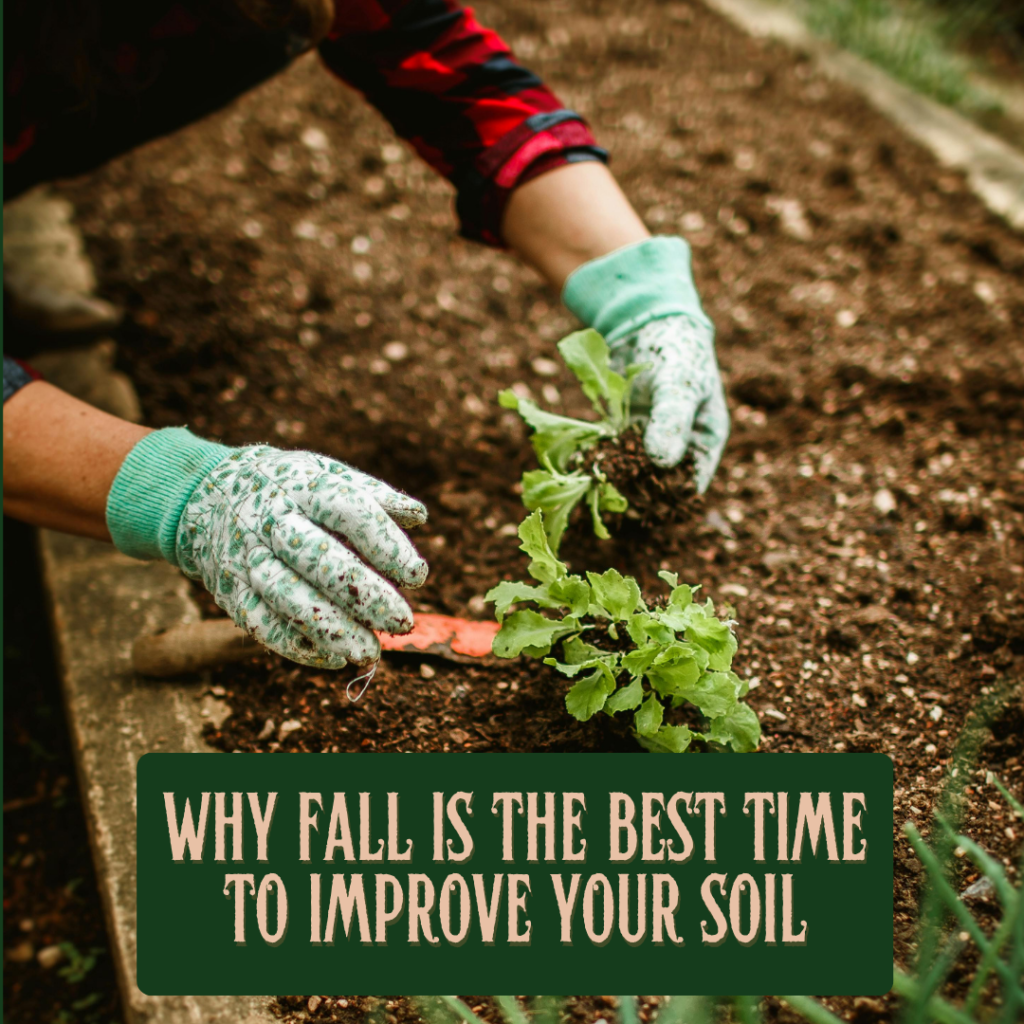
Why Fall Is the Best Time to Improve Your Soil
Want to improve soil in fall instead of waiting until spring? That may be one of the smartest things you can do for next year’s garden.
Spring gets most of the attention. It is when gardeners buy plants, start seeds, clean up beds, and get excited about another growing season.
But spring is also busy.
By the time you notice a soil problem, you may already have seedlings waiting to go into the ground.
Fall gives you something spring does not: time to pay attention to the soil itself.
Once summer growth slows down, you can see what months of watering, heat, plant growth, and foot traffic have done to your garden. You can deal with problems now instead of discovering them when your plants need the soil most.
Why Improve Soil in Fall Instead of Waiting Until Spring?
Think about what your garden soil has been through since planting season.
Roots have grown through it.
Water has moved through it.
Organic matter has continued to break down.
Hot weather may have dried it out.
Heavy rain may have pounded the surface.
Walking through beds or working around plants may have compacted certain areas.
By fall, your soil can behave very differently from the soil you started with in spring.
That makes the end of the growing season a great time to look for problems.
You are not trying to completely rebuild the garden before winter. You are looking for signs that tell you what your soil needs next.
Start by Looking at How Your Soil Feels
You do not need to be a soil scientist to learn something useful from your garden.
Start with what you can see and feel.
Does the soil feel loose and easy to work?
Or has it become hard, crusty, or packed down?
Are there areas where water disappears quickly and other places where it sits on the surface?
Does the soil pull away from the sides of raised beds or containers?
These are clues.
Compacted soil has less open space for water and air to move through. Soil that has become extremely dry can also become difficult to rewet.
That does not automatically mean the soil is bad. It means something about its condition has changed.
Fall gives you a chance to work on that before another round of plants depends on it.
Pay Attention to Water Penetration
One of the most useful things you can do during fall garden soil care is watch what happens when water hits the ground.
Healthy watering is not only about how much water you use.
It also matters whether the soil can take it in.
If water beads on the surface, runs away, pools, or seems to disappear around the edges while the middle stays dry, you may be dealing with poor water penetration.
Soil that actively resists water is often described as hydrophobic soil.
We have a full guide explaining why garden soil can become hydrophobic and stop absorbing water, so you don’t need to diagnose the entire problem here.
The important fall takeaway is this:
If your garden struggled to absorb water during summer, do not wait until the next heat wave to think about it.
Use the slower fall season to address the soil.
Organic Matter Can Be Part of Fall Soil Improvement
Fall is also a common time to add finished compost or other appropriate organic material to garden beds.
Organic matter can support soil structure and the living organisms that help keep soil functioning.
It can also help protect and gradually improve beds between growing seasons.
Oregon State University Extension notes that fall leaves can be used as mulch in annual gardens, helping add organic matter while protecting soil from the impact of rain.
That does not mean every garden needs a huge layer of compost every year.
More is not automatically better.
If you have been heavily amending your garden for years, a soil test can tell you what you actually need before you add more.
Think of fall soil improvement as working with what you have, not dumping everything from the garden center into the bed.
Protect Your Soil Instead of Leaving It Bare
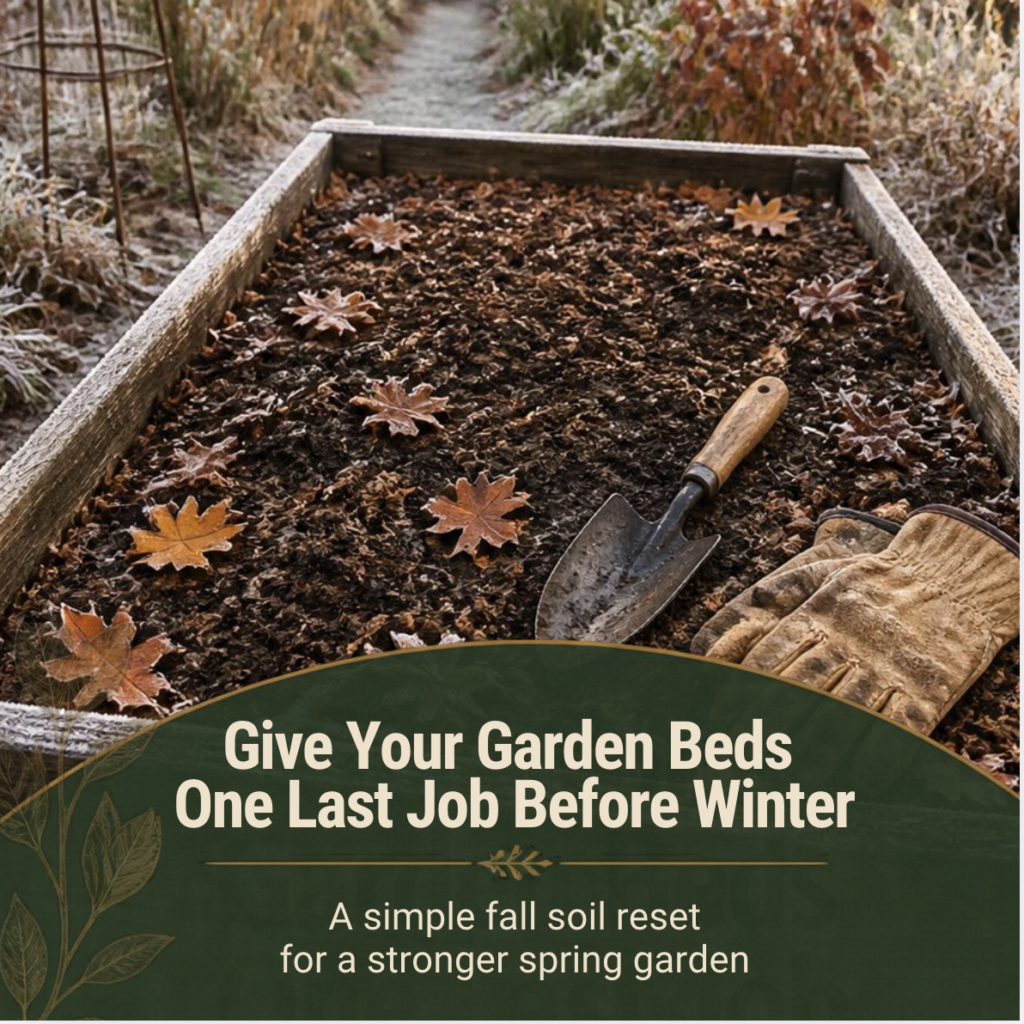
Once summer plants are removed, a garden bed can suddenly have a lot of exposed soil.
Leaving soil bare all winter may expose it to rain, erosion, weeds, and repeated weather changes.
Depending on your garden and climate, you might use:
- leaves
- mulch
- finished compost
- a cover crop
- existing plant residue that is healthy and appropriate to leave
Cover crops are especially useful because their roots keep growing in the soil after the main garden crop is finished. According to the University of Maryland Extension, cover crops can reduce erosion, contribute organic material, and support soil quality between vegetable crops.
You do not need to use every method.
Choose what makes sense for your garden.
The goal is to avoid treating the dirt like it no longer matters once the tomatoes and zucchini are gone.
Fall Is a Good Time to Think About Compaction
If certain parts of the garden have become dense or difficult to water, compaction may be part of the problem.
This happens easily around paths, heavily used beds, or places where soil has settled.
But that does not mean you need to aggressively till the entire garden.
In many cases, disturbing the soil less and keeping it protected can be better for long-term structure. Oregon State University Extension recommends limiting unnecessary soil disturbance and using mulch or cover crops to keep soil covered.
If a specific area is badly compacted, address that area.
If the rest of the bed is functioning well, leave it alone.
Gardening gets easier when you stop treating every square foot like it has the same problem.
Where a Soil Conditioner Fits Into Fall Garden Care
A soil conditioner for gardens can be useful when you are dealing with a specific soil problem.
That Yucca Stuff is both a soil conditioner and a wetting agent. Its role is different from fertilizer.
A fertilizer adds nutrients.
A wetting agent helps water spread and move into soil more effectively. That Yucca Stuff uses compounds found in yucca called saponins, which act as natural surfactants and help reduce the surface tension of water.
In plain English: it helps water soak in instead of simply sitting on top or running away.
That can be especially useful if the growing season left you with dry, stubborn, or water-repellent soil.
It is not a substitute for compost.
It is not mulch.
And it is not fertilizer.
It supports a different part of the soil-care routine: water movement.
Better Water Movement Matters Going Into the Next Season
It is easy to think about water only when plants are actively growing.
But the way your soil accepts and distributes moisture is part of its basic condition.
If fall rain hits extremely dry soil and most of that water runs off, the amount of rain matters less than where the water actually goes.
Improving water penetration can help the moisture you already have move into the soil more evenly.
That is why fall is a useful time to notice problems such as:
- water running off beds
- dry pockets below the surface
- crusted soil
- compacted areas
- soil that takes a long time to absorb water
If those problems existed all summer, they probably will not magically disappear because the calendar changed.
Prepare Soil for Next Season Without Going Overboard
The best fall soil routine isn’t necessarily the most complicated.
Ask yourself: What worked well this year?
Where did most plants struggle?
Did the soil stay evenly moist?
Did certain beds become compacted?
Did you notice water soaking in or running away?
Those answers tell you much more than automatically following the same fall checklist every year.
Your goal is not to make the soil “perfect.” Your goal is to help it function better.
The Bottom Line: Fall Gives Your Soil a Head Start
If you want to improve soil in fall, you don’t need to turn the end of the gardening season into another huge project.
Use fall as your chance to notice.
Check the soil.
Watch the water.
Protect bare ground.
Add organic matter where it makes sense.
Address compaction where you find it.
And if dry soil is struggling to take in water, support better water movement before the next growing season begins.
Spring will be busy enough.
Give your soil some attention now, while you have time to do something about what you learned this year.
Give Your Soil a Better Start
If water is running off dry soil instead of soaking in, That Yucca Stuff is a soil wetting agent and soil conditioner designed to help water move through the soil more effectively.
Shop That Yucca Stuff and give your soil a better start before next growing season.