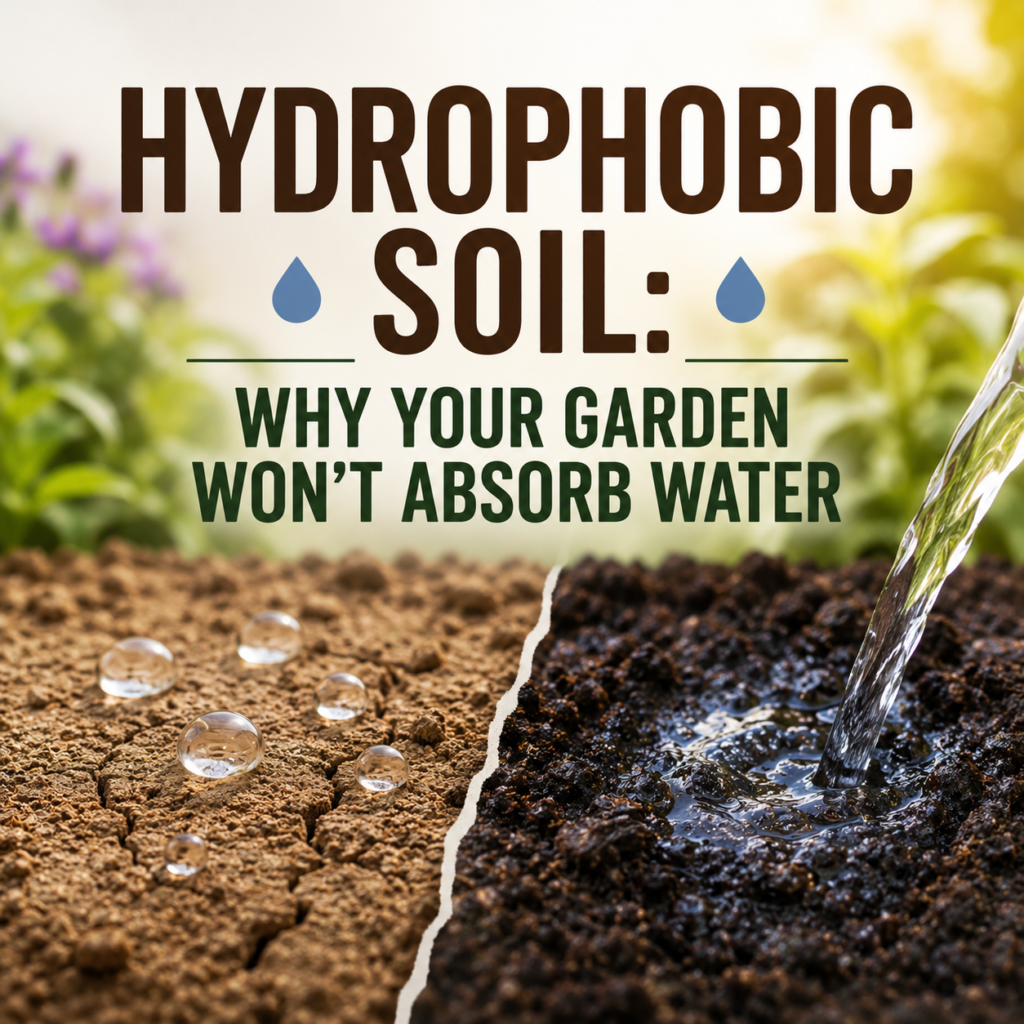
Hydrophobic Soil: Why Your Garden Won’t Absorb Water
Have you ever heard of Hydrophobic soil? Having this dirt creates challenges when watering your garden. Despite your efforts, water may run off, pool, or slide down without reaching plant roots.
If your soil is not absorbing water, you may be experiencing hydrophobic soil—a common issue caused by dry, compacted, or poorly structured ground.
The good news? Your soil is not ruined. In many cases, it just needs help taking water back in evenly. Let's look at how you can restore its ability to absorb moisture.
That is where a soil conditioner and wetting agent like That Yucca Stuff can make a real difference when working with hydrophobic soil.
Shop That Yucca Stuff on Amazon!
What Is Hydrophobic Soil?
Hydrophobic soil repels water rather than absorbing it.
In healthy soil, water should move down through the surface and spread through the root zone. It should reach the areas where roots are actually growing, not just sit on top or rush away.
But when soil becomes hydrophobic, water has a harder time penetrating the surface. Instead of soaking in, it may:
- bead up on top of the soil
- run off the surface
- drain straight through the edges of a container
- leave dry pockets under the surface
- make plants wilt even after watering
This can happen in garden beds, raised beds, containers, hanging baskets, houseplants, and even compost-heavy soil mixes.
Hydrophobic soil often fools gardeners into thinking plants are getting enough water even when they're not.
You may be doing the right thing on the surface. The problem is what is happening underneath.
Why Soil Stops Absorbing Water
Soil often becomes water-repellent for several reasons. Most gardeners run into at least one of these, especially during hot weather or after soil has dried out for too long.
1. The soil got too dry
When soil dries out completely, it can become harder to rewet.
This is especially common in potting soil, peat-heavy mixes, raised beds, and containers that sit in the sun or the wind. Once the soil gets bone dry, water may stop moving through it evenly. Instead, it can run across the top or down the sides.
That means the top may look wet for a minute, while the center of the root ball stays dry.
If you have ever watered a potted plant and watched water immediately pour out of the drainage holes, you have probably seen this happen.
2. Organic matter broke down unevenly
Organic matter is important for soil health, but as it breaks down, soil structure can change.
In containers and raised beds, this is especially noticeable. A fresh potting mix may start out fluffy and absorbent, then gradually become dense, crusty, or uneven. Over time, water may stop moving through the mix the way it did when it was new.
This is one reason gardeners often notice that older containers become harder to water.
The plant may still be alive. The soil may still contain nutrients. But if water cannot move evenly through the root zone, the plant can still struggle.
3. Soil became compacted
Compacted soil is another major reason water does not absorb well.
When soil particles press together too tightly, there is less space for air and water to move. Water may sit on the surface, run off, or only soak into certain areas.
This is common in garden beds that get walked on, raised beds that have sunk over time, and containers where soil has collapsed around the roots.
Compacted soil can make it harder for roots to grow, harder for water to reach the plant, and harder for nutrients to move through the soil.
4. Water is channeling instead of spreading
Sometimes water technically goes into the soil, but it does not spread evenly.
This is called channeling. Water finds the easiest path and follows it. In a container, that may mean water runs down one side and out the bottom. In a garden bed, it may mean certain pockets get wet while others stay dry.
This can trick you because the soil appears to have been watered. But when you disturb the soil, or dig a little deeper, you may find dry patches sitting right next to wet ones.
That uneven moisture is stressful for plants.
Signs Your Garden Has Hydrophobic Soil
You do not need fancy testing equipment to spot hydrophobic soil. Your garden will usually tell on itself.
Look for these signs:
- Water sits on top of the soil before soaking in.
- water runs off the bed or container surface
- Soil pulls away from the edges of pots.
- plants wilt even after watering
- The top layer of soil looks wet, but the soil beneath is dry.
- Water drains too quickly from containers.
- Raised beds dry out faster than expected.
- soil feels hard, crusty, dusty, or compacted
One of the easiest ways to check is to water slowly, wait a few minutes, then gently dig down a couple of inches.
If the top looks damp but the lower soil is still dry, water is not reaching the full root zone.
That is the problem we want to solve.
Why Regular Routine Watering Does Not Always Fix It
This is where gardeners get stuck.
The natural reaction is to water more. But more water is not always the answer. If the soil is repelling water or channeling it away from the roots, extra watering may just create more runoff.
You could pour on twice as much water and still leave dry pockets behind.
That matters because roots need consistent access to moisture. Not soaked, not flooded, not bone dry. Just steady, even moisture that lets the plant do its job.
When hydrophobic soil blocks that process, your plants may show stress even if you are out there watering faithfully.
This is why soil condition matters just as much as your watering schedule.
Healthy watering is not only about how often you water. It is about whether the soil can actually accept and distribute that water.
How a Soil Wetting Agent Helps
A soil wetting agent helps water move into and through the soil more evenly.
Instead of letting water bead up, run off, or travel through narrow channels, a wetting agent supports better water penetration. That can help moisture reach more of the root zone, rather than staying on the surface or escaping too quickly.
That Yucca Stuff is designed for gardeners dealing with exactly these kinds of soil and watering frustrations.
It works as a soil conditioner and wetting agent to help support:
- better water absorption
- more even water distribution
- improved soil performance
- healthier root conditions
- better moisture movement in dry or compacted soil
This does not mean you stop watering correctly. It means you give your soil support, so the water you are already using can do a better job.
Ready to help your soil absorb water again?
Shop That Yucca Stuff on Amazon
Where Hydrophobic Soil Shows Up Most Often
Hydrophobic soil can show up almost anywhere, but some gardening setups are more prone to it than others.
Containers and pots
Container gardens dry out faster than in-ground beds. Wind, sun, drainage holes, and limited soil volume all play a role.
Once potting soil dries out too much, it can start repelling water. You may water the pot and see water immediately run out of the bottom. That does not always mean the soil is fully hydrated. It may mean the water found a fast path out.
That is why container gardeners commonly benefit from soil support that helps water move through the entire potting mix.
Raised beds
Raised beds are amazing, but they are not maintenance-free.
Even premium raised-bed soil can settle and compact over time. Organic matter breaks down. Soil structure changes. Water may stop spreading evenly through the bed.
If your raised bed plants are struggling even though you water regularly, the issue may not be your effort. The soil may need help absorbing and distributing moisture again.
Houseplants
Hydrophobic potting soil is common in houseplants, especially if a plant has gone too long between waterings.
You may see water pooling on top, running down the inside edge of the pot, or draining out quickly while the root ball stays dry.
This is especially common with plants that prefer steady, consistent moisture, but are allowed to dry down too far.
Garden beds
In outdoor beds, hydrophobic soil can happen after heat, drought, compaction, or repeated drying cycles.
You may notice runoff during watering or rain. You may also see plants wilt faster because water is not staying available in the root zone.
In these cases, improving soil structure and water movement can help your garden use moisture more effectively.
How to Help Hydrophobic Soil Absorb Water Again
If your soil is not absorbing water, do not panic and do not immediately rip everything out.
Start with practical steps.
Water slowly
Fast watering often makes runoff worse. Give water time to soak in.
Use a soft flow, drip irrigation, or multiple shorter watering rounds. Water a little, pause, then water again. This gives dry soil more time to open up and accept moisture.
Break up crusted surfaces.
If the top layer of soil is hard or crusty, gently loosen it without damaging roots.
This can help water get past the surface instead of sliding away. For containers, you can lightly scratch the top layer with your fingers or a small hand tool.
For raised beds, loosen only what you need to loosen. You are not trying to destroy soil structure. You are just helping water enter.
Check below the surface.
Do not trust the top inch alone.
After watering, check deeper. If the soil under the surface is still dry, water is not reaching the root zone. That tells you the problem is not just frequency. It is absorption.
Improve soil composition over time.
Adding compost, protecting beds from foot traffic, refreshing container soil when needed, and avoiding repeated extreme drying can all help support better soil structure.
But those changes take time.
If you need a more direct way to improve water movement, a soil wetting agent can help.
Use That Yucca Stuff
That Yucca Stuff helps improve water absorption in dry, compacted, or hydrophobic soil.
It is especially useful when you are dealing with:
- water running off the soil
- Potting soil not absorbing water
- raised beds drying unevenly
- compacted garden soil
- containers that drain too fast
- soil that looks wet on top but stays dry below
Use it as directed to help your soil take in water more evenly and support better growing conditions.
Give your soil the backup it needs:
Buy That Yucca Stuff on Amazon
Is Hydrophobic Soil the Same as Bad Soil?
Not necessarily.
Hydrophobic soil does not automatically mean your soil is worthless. It means your soil is struggling to interact with water properly.
That can happen to good soil, expensive soil, organic soil, compost-rich soil, and potting mixes that used to work just fine.
This is important because many gardeners assume they need to replace everything. Sometimes replacement makes sense, especially if a potting mix is completely broken down. But in many cases, the better first step is to help the soil function again.
If your soil still has decent structure but is resisting water, a wetting agent and soil conditioner may help restore better moisture movement.
In plain English: do not throw away your whole setup before you try helping the soil do its job.
What Gardeners Usually Get Wrong About Watering
Most gardeners focus on the plant first.
The leaves are wilting. The stems look weak. The vegetables are struggling. The flowers are drooping.
So they water more.
But the real issue may be the soil.
If water is not reaching the roots, your plant is still thirsty. It does not matter how much water you pour on top. Roots cannot use water that ran off, pooled above the surface, or drained out through one narrow channel.
That is why That Yucca Stuff fits into a practical gardening regimen. It is not about substituting good watering habits, but helping those habits actually work.
When soil absorbs water better, your plants have a better chance of getting the moisture they need.
When to Use That Yucca Stuff
That Yucca Stuff is a smart option when your soil is showing signs of poor water absorption.
Use it when you notice:
- water running off instead of soaking in
- dry pockets in raised beds
- compacted soil in garden beds
- crusty soil surfaces
- containers drying out too quickly
- houseplant soil pulling away from the pot
- potting soil that will not rewet easily
- plants wilting even after watering
It can be used as part of your regular soil care routine for gardens, raised beds, containers, compost, and indoor plants.
For best results, always follow the product directions and pay attention to how your soil responds over time.
Make watering count again:
Shop That Yucca Stuff on Amazon
The Bottom Line: Your Soil Needs to Let Water In
Hydrophobic soil is one of those gardening problems that can make you feel like you are doing everything wrong.
But often, you are not.
You may be watering regularly. You may be using good soil. You may be paying attention. The issue is that your soil has stopped absorbing and distributing water the way your plants need it to.
When that happens, more water is not always the fix. Better water movement is.
That Yucca Stuff helps support dry, compacted, and water-repellent soil so moisture can move more evenly through the root zone. For real gardeners, that means less wasted watering, fewer mystery dry pockets, and better support for the plants you are trying to grow.
Before you replace your soil or blame yourself, give your soil the support it needs to work better.
Help your garden absorb water again.
Order That Yucca Stuff on Amazon
About That Yucca Stuff
That Yucca Stuff helps water move through dry, compacted, or hydrophobic soil so it can reach the roots where plants need it most.