Give Your Garden Beds One Last Job Before Winter
By the time late fall arrives, most gardeners are ready to be finished. The tomatoes have slowed down, summer flowers are fading, leaves are piling up, and the first frosty mornings are starting to make their appearance. After months of planting, watering, weeding, harvesting, and trying to keep everything alive through the heat, it can be tempting to pull out the dead plants, put away the tools, and forget about the garden until spring.
But before you officially call the gardening season over, give your garden beds one last job before winter: prepare the soil for what comes next.
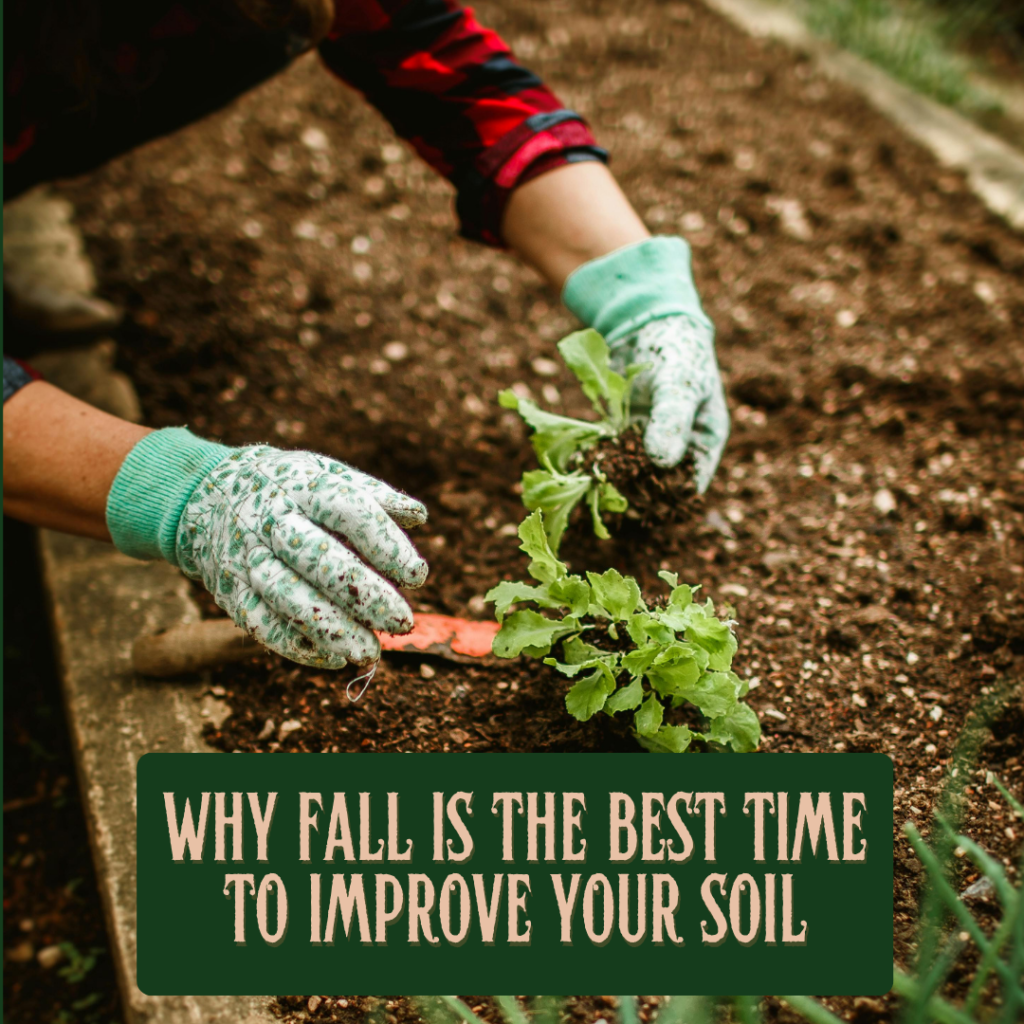
Fall is actually one of the best opportunities to improve your garden soil. Instead of waiting until spring—when you’re already eager to plant—you can use the end of the growing season to clean up problem material, return organic matter to the soil, protect the soil surface, improve water movement, and give natural decomposition processes months to work.
Think of it less as putting your garden to bed and more as giving it a head start.
1. Start With a Selective Garden Cleanup
Fall cleanup doesn’t have to mean stripping your garden beds completely bare. In fact, leaving some healthy plant material can provide habitat for beneficial insects and contribute organic matter to your garden. The key is being selective about what stays and what goes.
Remove plants that showed signs of significant disease or serious pest problems during the growing season. Diseased leaves, stems, and fruit generally shouldn’t be left sitting directly in the bed where the same problems could potentially return next season. Depending on the disease involved and your composting method, you may also want to keep that material out of a home compost pile.
Healthy plant material is different. Some can be chopped into smaller pieces and composted, while certain stems and seed heads can remain through winter to provide shelter or food for insects and birds.
Also remove weeds before winter whenever possible—especially weeds that have gone to seed. Spending a little time removing them now can potentially save you from dealing with hundreds of their descendants next spring.
2. Look at the Soil You Have Left Behind
Once the summer plants are out of the way, you get a much better look at the soil itself.
Is the surface hard and crusted?
Does water tend to pool instead of soaking in?
Has the soil become heavily compacted?
Does it seem unusually dry beneath the surface?
Are there areas where water runs across the top of the bed rather than moving into the soil?
These observations can tell you quite a bit about what happened underground during the growing season.
Soil isn’t simply something that holds a plant upright. Healthy garden soil is a complex environment containing mineral particles, organic matter, air, water, microorganisms, fungi, insects, roots, and countless biological interactions. Maintaining good soil structure helps create spaces where both water and oxygen can move.
Fall gives you an opportunity to address some of those conditions without disturbing actively growing plants.
3. Add Organic Matter
One of the simplest things you can do for a garden bed in fall is add organic matter.
Finished compost is an excellent option. Spread a layer over the surface of your garden beds and allow winter weather and soil organisms to gradually incorporate it. You don’t necessarily need to aggressively till it into the soil.
Other useful materials can include aged manure appropriate for garden use, shredded leaves, leaf mold, grass clippings that haven’t been treated with unwanted lawn chemicals, or other properly composted organic materials.
Shredded fall leaves are especially useful because they’re usually abundant and free. Rather than bagging every leaf and sending it away, shred some with a mower and use them as a protective layer over your garden beds or add them to your compost pile.
Over time, organic matter helps support soil structure, moisture management, nutrient availability, and the organisms living beneath the surface.
4. Help Water Move Into Dry or Water-Resistant Soil
After a long, hot summer, some garden soils can become surprisingly difficult to rehydrate. Water may pool on the surface, run toward the edge of a bed, or soak unevenly instead of penetrating the soil.
This is where a soil surfactant or wetting agent can be useful.
That Yucca Stuff™ is made with Yucca schidigera and can be incorporated into your fall soil-care routine to help water spread through soil more effectively. Instead of thinking of it as something you only use while plants are actively growing, consider using it when you’re preparing garden beds for winter as well.
Apply according to the product directions and water the bed thoroughly. The goal is to help moisture move into the soil before you add your final protective layer.
This can be especially helpful in beds that have become extremely dry, compacted at the surface, or difficult to water evenly during the growing season.
5. Don’t Automatically Till Everything
For years, turning over the entire garden was practically synonymous with fall garden cleanup. But depending on your soil and gardening method, heavy tilling isn’t always necessary.
Excessive disturbance can break apart existing soil structure and disrupt organisms living within different soil layers.
If your bed has severe compaction, you may need to loosen it. But that doesn’t necessarily mean completely turning the soil upside down.
A garden fork or broadfork can be used to gently loosen compacted areas while leaving much of the soil structure intact. Insert the tool into the soil and gently rock it backward rather than repeatedly flipping large sections of soil.
The goal is improvement—not making the garden look perfectly cultivated.
6. Give Bare Soil a Winter Blanket
Once you’ve cleaned and amended the bed, don’t leave the soil completely exposed if you can avoid it.
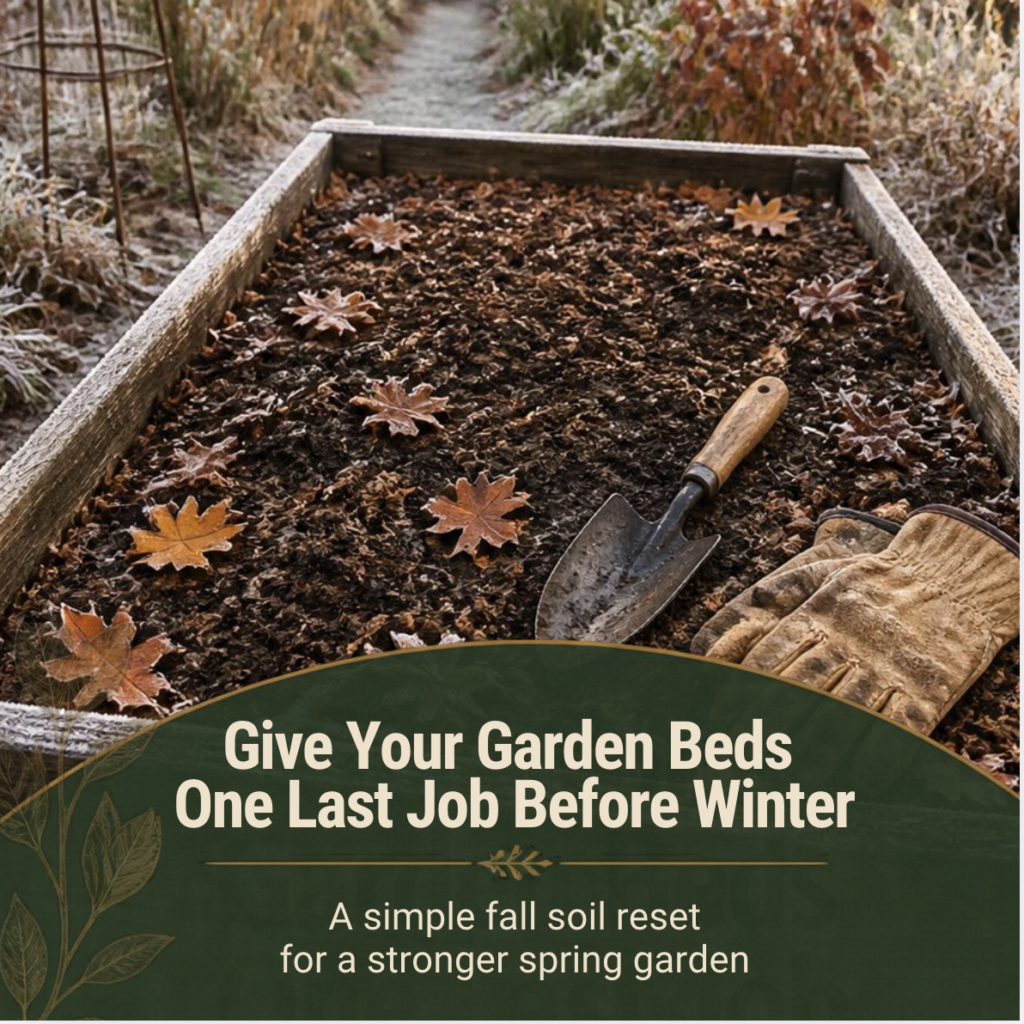
Bare soil is vulnerable to erosion, heavy rain, wind, temperature swings, and surface crusting. A protective layer acts like a blanket over the garden during winter.
Try covering the bed with shredded leaves, straw, leaf mold, compost, or another appropriate organic mulch.
You don’t need an enormous pile. A manageable layer that covers the exposed surface can help protect the soil while gradually breaking down.
By spring, some of that material may already be partially decomposed. You can move aside anything remaining when you’re ready to plant or incorporate suitable material into your garden system.
7. Consider Planting a Cover Crop
If your climate and timing allow, another option is planting a cover crop.
Cover crops aren’t necessarily grown for harvesting. They’re planted primarily because of what they can do for the soil. Depending on the species, they can help protect bare ground, reduce erosion, add organic matter, support soil biology, suppress weeds, or contribute to nutrient management.
Common options include winter rye, oats, clover, field peas, hairy vetch, and mixes designed specifically for home gardens.
The right choice depends heavily on your climate, planting date, and what you plan to grow next year, so check recommendations for your growing region before planting.
Even a small raised bed can potentially benefit from cover cropping. You don’t need a farm-sized garden to use agricultural soil-building techniques.
8. Start a Compost Pile With Your Fall Cleanup
Your garden may be winding down, but your compost pile can be getting started.
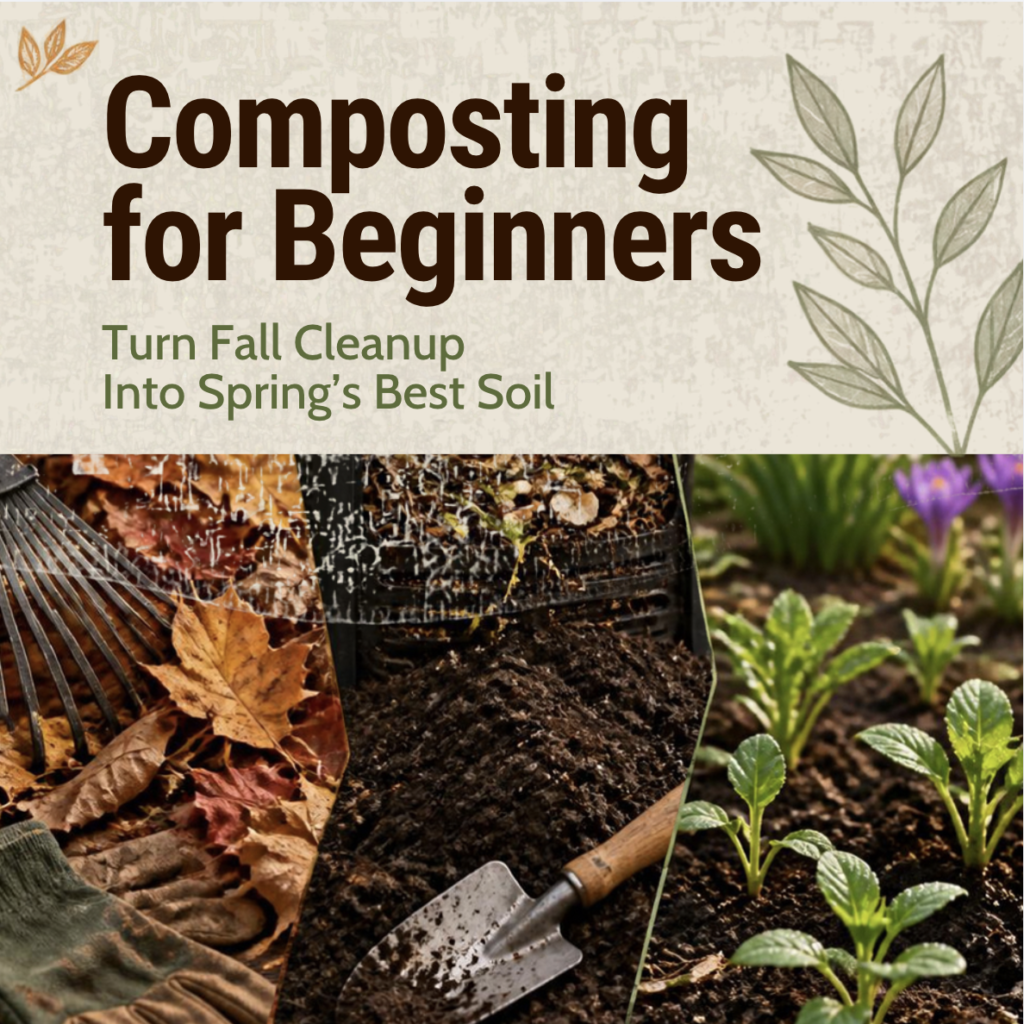
Fall naturally provides many of the ingredients needed for compost: leaves, spent annual plants, garden trimmings, grass clippings, and kitchen scraps.
The abundance of dry leaves is particularly valuable because they provide a carbon-rich “brown” material that can be stored and mixed with nitrogen-rich “green” materials throughout the year.
Instead of thinking of fall cleanup as waste removal, think of it as collecting ingredients for next year’s soil.
Today’s dead leaves can become tomorrow’s compost.
9. Take Notes Before You Forget
This might be the most overlooked fall garden job of all.
Before you completely forget what happened this year, write it down.
Which bed dried out constantly?
Where did water pool?
Which plants struggled?
Where were the weeds worst?
Which vegetables performed incredibly well?
Did certain areas seem more compacted than others?
Were there places where plants consistently looked stressed even though they received plenty of water?
A few notes—or even photos on your phone—can be incredibly helpful when you’re standing outside next spring trying to remember exactly what you wanted to change.
Gardening becomes much easier when every season teaches you something about the next one.
10. Then Let Winter Do Some of the Work
One of the best things about preparing your soil in fall is that you don’t need immediate results.
You’ve got time.
Rain, snow, freeze-thaw cycles, microorganisms, fungi, insects, and decomposition will continue affecting your garden long after you’ve gone inside for the winter.
The compost you spread can begin interacting with the soil. Leaves can slowly break down. Organic mulch can protect the surface. Moisture can gradually move through the bed.
Then, when that first warm stretch of spring weather arrives and you suddenly want to plant everything at once, you’re not starting with an abandoned patch of hard, exposed soil.
You’re returning to a garden you’ve already been preparing.
Your End-of-Season Garden Bed Checklist
Before you officially call the season finished:
- Remove diseased plants and persistent weeds.
- Leave beneficial healthy plant material where appropriate.
- Observe drainage, compaction, and soil condition.
- Add finished compost or other suitable organic matter.
- Loosen seriously compacted areas without unnecessarily disturbing the entire bed.
- Use That Yucca Stuff™ as part of your final watering routine when your soil needs help absorbing and distributing moisture. Find That Yucca Stuff™ HERE or on Amazon.
- Cover exposed soil with leaves, compost, straw, or another appropriate mulch.
- Consider a winter cover crop if there’s still time in your growing region.
- Save healthy garden debris and fallen leaves for compost.
- Write down what worked—and what didn’t—while you still remember.
Then clean your tools, put away the hose, and enjoy the break.
Your garden may look quiet all winter, but that doesn’t mean nothing is happening below the surface.
A little attention now can mean healthier soil, easier spring preparation, and a garden that’s ready to get back to work when you are.