Real vs. Artificial Christmas Trees: Which Is More Sustainable?
The environmental impact of your Christmas tree might surprise you. Here’s what you should know about real and artificial trees, how to make a more sustainable choice, and how to keep your real Christmas tree fresh throughout the holiday season.
Every holiday season, millions of families face the same question: Should we buy a real Christmas tree or invest in an artificial one? For some, there’s nothing quite like the smell of fresh pine filling the house, the tradition of visiting a Christmas tree farm, and the experience of bringing home a beautiful, living piece of nature. For others, artificial trees offer convenience, fewer fallen needles, and the ability to reuse the same tree year after year.
But when it comes to sustainability, which option is actually better for the environment?
The answer isn’t quite as simple as you might think. While artificial Christmas trees can be reused for many years, their manufacturing process, materials, and transportation create environmental impacts that are easy to overlook. Real Christmas trees, on the other hand, are renewable, biodegradable, and often grown on farms that support local agriculture. However, they also require land, water, transportation, and responsible disposal.
The good news is that whichever type of tree you prefer, there are ways to make your holiday traditions more environmentally friendly.
If you’re someone who loves the tradition of a real Christmas tree, we’ll also explore how proper watering, tree care, and plant-based products like That Yucca Stuff™, made with Yucca schidigera, can fit into your holiday plant-care routine. After all, choosing a real tree is only part of the equation. Keeping it fresh, reducing unnecessary waste, and disposing of it responsibly are just as important.
Understanding the Environmental Impact of Christmas Trees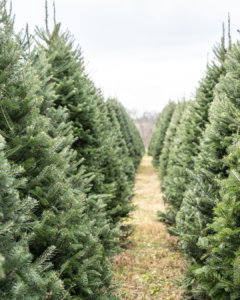
Before deciding whether a real or artificial Christmas tree is more sustainable, it helps to understand what sustainability actually means in this situation.
When we talk about an environmentally friendly Christmas tree, we’re considering much more than whether it can be reused or recycled. We also need to look at the resources required to produce it, the carbon emissions associated with manufacturing and transportation, its impact on the environment while it’s being grown or manufactured, and what happens when it’s no longer being used.
For example, an artificial Christmas tree might last for ten years or longer, eliminating the need to purchase a new tree every December. That sounds like an environmentally responsible choice, but most artificial trees are manufactured using plastic and metal components that require significant energy to produce. Many are also shipped long distances before reaching stores.
A real Christmas tree has a different environmental footprint. It takes several years to grow, requiring water, soil, sunlight, and agricultural management. However, during that growing period, it also absorbs carbon dioxide, produces oxygen, and can provide habitat for wildlife. Once the holiday season ends, a real tree can be chipped into mulch, composted under suitable conditions, or recycled through community programs.
Neither option is completely without environmental impact. The most sustainable choice often depends on how the tree is produced, how long it is used, how far it travels, and what happens to it afterward.
Real Christmas Trees: A Renewable Holiday Tradition
One of the biggest misconceptions about real Christmas trees is that purchasing one contributes to deforestation. While cutting down trees might initially seem environmentally harmful, most Christmas trees sold in the United States are grown specifically for the holiday season on managed Christmas tree farms.
These farms operate much like other agricultural businesses. Trees are planted, cultivated, maintained, harvested, and replaced with new seedlings. Depending on the species and growing conditions, it can take approximately seven to ten years for a Christmas tree to reach a marketable height.
During those growing years, the trees provide environmental benefits that artificial trees simply cannot offer.
Real Christmas Trees Absorb Carbon Dioxide
Like other plants, Christmas trees absorb carbon dioxide from the atmosphere through photosynthesis. They use sunlight to convert carbon dioxide and water into energy, releasing oxygen in the process.
Although the carbon stored in a harvested tree may eventually return to the atmosphere as the tree decomposes, Christmas tree farms can continue growing new trees that absorb carbon dioxide year after year.
The environmental benefit isn’t simply that one tree absorbs carbon. It’s that responsibly managed Christmas tree farms maintain growing vegetation across agricultural land for extended periods.
Christmas Tree Farms Support Wildlife and Soil Health
Christmas tree farms can also provide habitat for birds, insects, and small mammals. The vegetation surrounding the trees can support biodiversity, while root systems help hold soil in place and reduce erosion.
Healthy soil is especially important for sustainable agriculture. Soil supports plant growth, stores nutrients, manages water, and provides habitat for countless beneficial microorganisms.
However, not all Christmas tree farms use the same agricultural practices. Some rely heavily on pesticides, fertilizers, and intensive land management. Others incorporate conservation practices such as ground cover, reduced chemical applications, and responsible soil management.
If sustainability is important to you, consider asking local Christmas tree growers about their farming practices. Supporting farms that prioritize healthy soil, responsible water use, and environmental stewardship can make your Christmas tree purchase even more meaningful.
Real Christmas Trees Are Biodegradable
Unlike artificial trees, real Christmas trees are made entirely of natural plant material. Once the holiday season ends, they can be broken down and returned to the environment through composting, mulching, or other approved recycling methods.
Many communities offer Christmas tree recycling programs that turn discarded trees into mulch for landscaping, parks, and gardens. This keeps valuable organic material out of landfills and allows it to serve another purpose.
The key is choosing the right disposal method. Sending a real Christmas tree to a landfill can create unnecessary environmental impacts, particularly when organic material decomposes under low-oxygen conditions and produces methane.
A real Christmas tree is a renewable resource, but how you care for and dispose of it determines how sustainable that holiday tradition ultimately becomes.
Artificial Christmas Trees: Convenient, Reusable, but Not Without Environmental Costs
Artificial Christmas trees have become increasingly popular because they offer convenience, consistency, and long-term reuse. Families can purchase a tree once, store it after the holidays, and bring it out again the following year without visiting a Christmas tree farm or worrying about watering.
For households with allergies, limited transportation, or a preference for low-maintenance decorations, artificial trees can be a practical option.
But convenience doesn’t necessarily mean sustainability.
Artificial Trees Are Usually Made From Plastic
Most artificial Christmas trees are manufactured using materials such as polyvinyl chloride (PVC), polyethylene (PE), steel, and other components. These materials require energy and resources to produce, and many originate from nonrenewable sources.
Plastic manufacturing involves fossil fuels, while metal production and assembly add to the tree’s overall environmental footprint.
Artificial trees also frequently travel significant distances between manufacturing facilities, distribution centers, retail stores, and consumers. These transportation emissions contribute to their overall carbon footprint before the tree ever reaches your living room.
How Many Years Does an Artificial Christmas Tree Need to Be Reused?
This is where the sustainability comparison becomes particularly interesting.
Life-cycle assessments have found that an artificial Christmas tree can become environmentally competitive with purchasing a new real tree each year, provided it is reused long enough.
A 2018 study commissioned by the American Christmas Tree Association estimated that an artificial tree could compare favorably after approximately five years of reuse. Other assessments suggest longer periods, with some experts identifying approximately seven to ten years as a reasonable comparison range. These estimates depend on manufacturing, transportation, disposal methods, and the environmental factors being measured.
The American Christmas Tree Association+1
In other words, purchasing an artificial Christmas tree and replacing it every two or three years is generally less sustainable than keeping the same tree for a decade or longer.
If you already own an artificial Christmas tree, the most environmentally responsible choice may be to continue using it rather than replacing it simply because a newer model looks more realistic.
Artificial Christmas Trees Are Difficult to Recycle
One of the biggest environmental disadvantages of artificial Christmas trees is what happens when they reach the end of their useful life.
Because artificial trees contain multiple materials that are difficult to separate, most cannot be processed through standard household recycling programs.
As a result, unwanted artificial trees often end up in landfills, where their plastic components can remain for many years.
Donating, repairing, or reselling an artificial Christmas tree can help extend its lifespan and reduce waste. Even a tree with broken lights may still be usable with replacement light strands.
Real vs. Artificial Christmas Trees: A Sustainability Comparison
Here’s how the two options compare across several important environmental factors.
| Environmental factor | Real Christmas tree | Artificial Christmas tree |
| Materials | Renewable plant material | Primarily plastic and metal |
| Carbon absorption during production | Absorbs CO₂ while growing | Does not absorb CO₂ |
| Manufacturing | Agricultural cultivation | Industrial manufacturing |
| Transportation | Lower impact when locally sourced | Often transported long distances |
| Reusability | Usually one holiday season | Multiple years |
| Biodegradability | Yes, if untreated | Generally no |
| Recycling | Often accepted for mulching | Difficult to recycle |
| Maintenance | Requires regular watering | Minimal maintenance |
| Best sustainability practice | Buy locally and recycle responsibly | Reuse for many years |
Neither option is automatically the most sustainable in every situation. However, a locally grown real Christmas tree that is properly cared for and recycled after the holidays can be an excellent environmentally conscious choice.
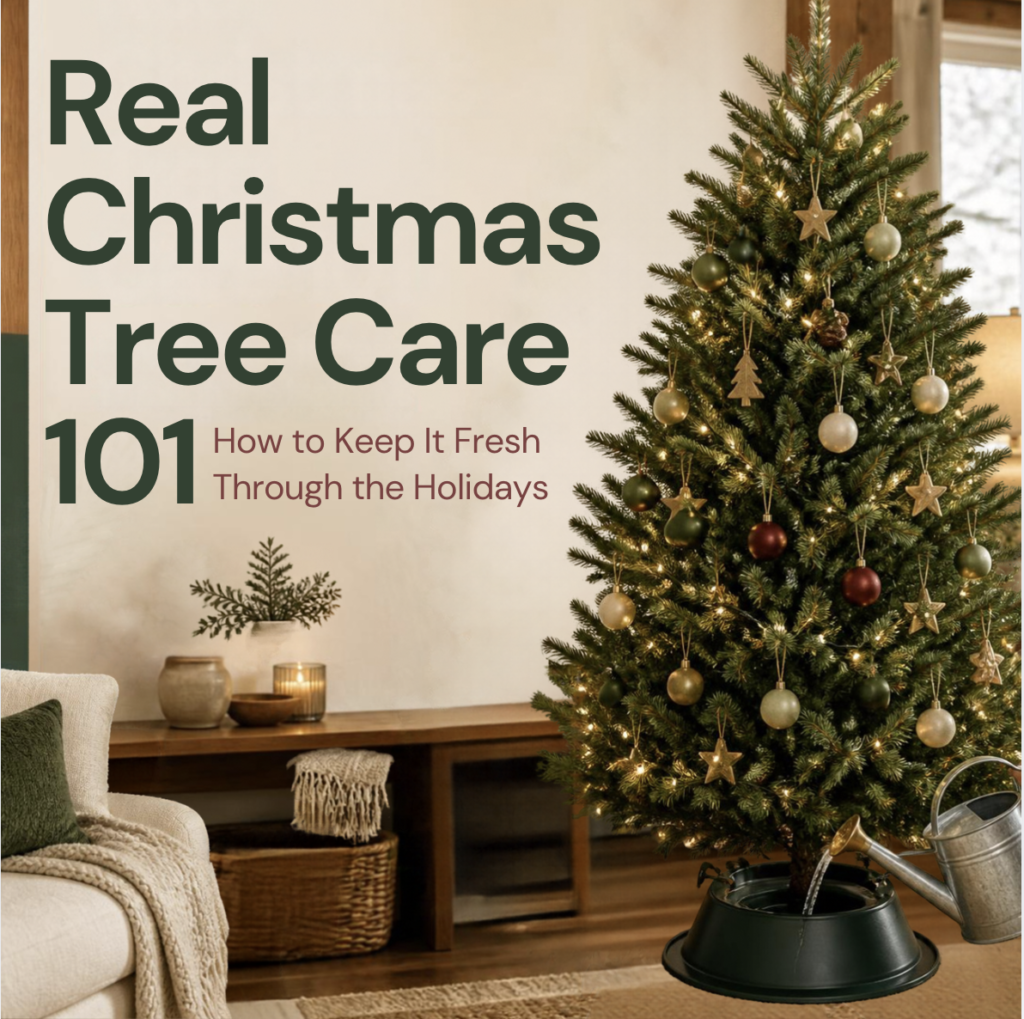
How to Keep a Real Christmas Tree Fresh Throughout the Holiday Season
One of the most common concerns about purchasing a real Christmas tree is keeping it fresh from Thanksgiving through Christmas.
Nobody wants a tree that starts dropping needles after a week, loses its beautiful green appearance, or becomes dry and brittle before the holiday celebrations are over.
Fortunately, keeping a real Christmas tree fresh doesn’t have to be complicated. With the right preparation and consistent care, many fresh-cut trees can remain attractive for approximately three to four weeks, depending on the species, initial freshness, and indoor conditions.
Yard and Garden
1. Start With the Freshest Tree Possible
The condition of your Christmas tree when you purchase it plays a major role in how long it will last.
Whenever possible, choose a freshly harvested tree from a local Christmas tree farm. Ask when the tree was cut, inspect the needles, and look for branches that remain flexible rather than brittle.
A healthy, fresh tree should have vibrant coloring and needles that generally remain attached when you gently run your hand along a branch.
Different tree species also have different needle-retention characteristics. Fraser firs, Noble firs, and other popular holiday varieties are often chosen because of their appearance, fragrance, and ability to retain needles.
Choosing a fresh tree gives you the best possible starting point for a beautiful holiday display.
2. Make a Fresh Cut Before Placing the Tree in Water
After a Christmas tree is harvested, the exposed surface at the bottom of its trunk can become less effective at absorbing water.
Before placing the tree in its stand, make a fresh, straight cut approximately half an inch from the bottom of the trunk.
This helps expose a fresh surface for water uptake. Place the tree in water as soon as possible after making the cut.
Avoid cutting the trunk at an angle or shaving down the sides to fit an undersized stand. The outer wood is important for water absorption, and removing it can interfere with hydration.
3. Keep the Water Reservoir Filled
Water is the single most important factor in maintaining the freshness of a cut Christmas tree.
A freshly harvested tree can absorb a surprising amount of water, especially during its first several days indoors.
The National Christmas Tree Association recommends a stand that holds approximately one quart of water for every inch of trunk diameter. A tree with a four-inch trunk, for example, should have a stand capable of holding at least one gallon of water.
Check the reservoir every day, and more frequently during the first week.
Most importantly, never allow the water level to fall below the bottom of the trunk. Once the exposed cut surface dries out, water uptake can become significantly reduced.
Keeping the reservoir consistently filled helps maintain needle moisture and reduces premature drying.
4. Keep Your Tree Away From Heat Sources
A warm, cozy home is part of the holiday experience, but excessive heat can shorten the lifespan of a real Christmas tree.
Fireplaces, heating vents, radiators, wood stoves, and direct sunlight can all accelerate moisture loss.
Position your tree away from these heat sources whenever possible. You can also use LED Christmas lights, which generally produce less heat and consume less electricity than traditional incandescent holiday lights.
If your home becomes particularly warm during the winter, maintaining a slightly cooler room temperature can also help slow the drying process.
5. Avoid Unproven Christmas Tree Water Additives
You’ve probably heard recommendations for adding sugar, aspirin, soda, or other homemade mixtures to Christmas tree water.
Unfortunately, these popular tricks aren’t supported by reliable evidence.
According to the National Christmas Tree Association and university extension research, plain tap water is the recommended option for fresh-cut Christmas trees. Some additives can actually interfere with moisture retention or contribute to needle loss.
The best approach is simple: start with a fresh tree, make a clean cut, use an adequately sized stand, and keep the water reservoir full.
Can That Yucca Stuff™ Help Your Real Christmas Tree Last Longer?
At That Yucca Stuff™, we’re passionate about helping people take better care of their plants and soil using plant-based ingredients.
Our soil conditioner is formulated with 97% Yucca schidigera, along with citric and humic acids. It is an OMRI Listed product designed to support soil and water management in gardening applications.
Yucca schidigera contains naturally occurring compounds called saponins, which have surfactant properties. Surfactants help water spread and wet surfaces more effectively, which is why yucca-based products are used in soil-wetting applications.
But there’s an important distinction between caring for a plant growing in soil and maintaining a fresh-cut Christmas tree.
Understanding How Yucca-Based Soil Conditioners Work
When soil becomes excessively dry, it can sometimes become difficult to rewet evenly. Instead of soaking into the root zone, water may run off the surface or move through certain channels while leaving other areas dry.
Yucca-based wetting agents can help improve the way water interacts with soil, encouraging more uniform moisture distribution under appropriate conditions.
For plants with established root systems, maintaining consistent moisture can support healthy growing conditions.
This makes yucca-based soil conditioners particularly useful in applications such as container gardening, houseplant care, outdoor garden beds, and other soil-based growing environments.
However, a fresh-cut Christmas tree no longer has a functioning root system. It absorbs water through its cut trunk rather than through soil.
Although That Yucca Stuff™ has water-wetting properties, there is currently no established evidence that adding it to a cut Christmas tree’s water reservoir extends freshness, improves needle retention, or makes the tree last longer. For cut trees, plain water remains the recommended approach.
That doesn’t mean That Yucca Stuff™ has no place in a sustainable Christmas tree tradition. In fact, there are several ways it can fit into your holiday plant-care routine.
Using That Yucca Stuff™ With Living, Potted Christmas Trees
If you prefer a living Christmas tree that still has its roots, soil health and moisture management become much more important.
Unlike a cut tree, a potted Christmas tree can continue growing after the holidays if it receives appropriate care and is suitable for replanting.
Living Christmas trees need a balance of moisture, drainage, and healthy root conditions. Container soil can dry unevenly, especially when plants are moved between outdoor and indoor environments.
That Yucca Stuff™ is designed for soil-wetting applications, so it may be useful as part of a broader soil-care routine for compatible container-grown plants. Follow the product label and check suitability for the particular tree species and growing conditions.
A yucca-based soil conditioner is not a substitute for watering, drainage, or appropriate temperature management, and it should not be treated as a guarantee that a living Christmas tree will survive indoors.
Supporting the Soil Where Future Trees Grow
Another way That Yucca Stuff™ connects with sustainable Christmas tree care is through its broader role in maintaining healthy soil.
Whether you’re growing evergreens, caring for landscape plants, or maintaining a backyard garden, soil moisture management is an important part of successful plant care.
Healthy soil supports root development, nutrient availability, and the beneficial organisms that contribute to a productive growing environment.
By incorporating appropriate soil-conditioning practices into your gardening routine, you can support the plants and landscapes that remain long after the holiday decorations are packed away.
For gardeners interested in sustainable plant care, That Yucca Stuff™ offers a plant-derived soil-wetting option that can complement good watering habits and responsible soil management.
What About Living Christmas Trees That Can Be Replanted?
If you’re looking for another environmentally conscious alternative, consider purchasing a living Christmas tree with its roots intact.
Living Christmas trees are typically sold in containers or with their root balls wrapped in burlap. Instead of being discarded after Christmas, these trees can potentially be planted outdoors and continue growing for years.
This approach appeals to families who want to establish a holiday tradition that gives something back to the environment.
Imagine planting one Christmas tree each year and eventually having a landscape filled with evergreens that represent years of family memories.
However, living Christmas trees require additional planning and care.
Choose a Tree That Will Thrive in Your Climate
Not every Christmas tree species is suitable for every growing region.
Before purchasing a living tree, research its mature size, preferred soil conditions, sunlight requirements, and climate tolerance.
A tree that thrives in a cool, moist region may struggle in an area with hot summers or dry soil.
Selecting an appropriate species improves the likelihood that your tree will survive after planting.
Limit the Time Your Living Tree Spends Indoors
Living evergreen trees are adapted to outdoor conditions, and extended exposure to warm indoor temperatures can interfere with their natural winter dormancy.
Unlike cut Christmas trees, which can remain indoors for several weeks, living trees should generally spend only a short period inside.
Gradually acclimate the tree when moving it between outdoor and indoor environments, keep it away from heating vents, and avoid allowing the root ball to dry out.
Once the holiday celebrations are over, transition the tree back to outdoor conditions carefully.
Prepare the Planting Location Ahead of Time
If you live in a region where the ground freezes during winter, consider preparing your planting location before temperatures become too cold.
Choose a site that provides sufficient space for the tree’s mature size and meets its sunlight and drainage requirements.
Once planted, water appropriately and apply mulch around the root zone to help moderate soil temperature and conserve moisture.
For soil that struggles to absorb water evenly, a compatible soil-wetting product such as That Yucca Stuff™ may be worth considering as part of your regular landscape-care routine.
Remember that successful transplanting depends primarily on choosing the right species, protecting the roots, and following proper planting and watering practices.
Sustainable Ways to Dispose of Your Real Christmas Tree
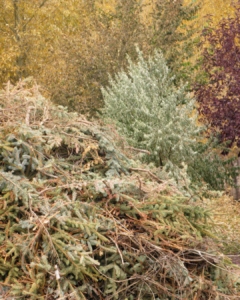 Recycling your Christmas tree through a local composting or mulching program is one way to keep organic materials out of landfills and support more sustainable waste management practices. The sustainability of a real Christmas tree doesn’t end when the decorations come down.
What happens after Christmas can make a meaningful difference in your tree’s environmental footprint. Instead of sending your tree to a landfill, consider ways to return its organic material to the environment.
Turn Your Christmas Tree Into Mulch
One of the most beneficial ways to recycle a real Christmas tree is to turn it into mulch.
Christmas tree branches and trunks can be chipped into smaller pieces and used around landscaping beds, shrubs, and trees.
Mulch helps reduce evaporation from the soil surface, moderates soil temperature, and can suppress weeds. As untreated organic mulch gradually decomposes, it also contributes organic material to the soil.
Many municipalities offer Christmas tree recycling programs that process discarded trees into landscaping mulch.
Before recycling, remove all ornaments, lights, tinsel, hooks, and other decorations.
Compost Appropriate Tree Materials
Christmas trees can also contribute to composting, although their woody branches and needles break down more slowly than many kitchen scraps or soft garden materials.
Shredding or chipping the tree into smaller pieces helps speed decomposition.
Mixing these woody materials with nitrogen-rich compost ingredients, such as vegetable scraps and fresh green plant material, can help create a more balanced compost pile.
Avoid adding trees that have been artificially flocked, heavily decorated, or treated with substances that your composting program does not accept.
Create Wildlife Habitat
In some situations, an untreated Christmas tree can be placed in an appropriate outdoor location to provide temporary shelter for birds and small wildlife.
Branches can offer protection from wind and predators, especially during winter.
Check local regulations and avoid creating fire hazards or attracting unwanted pests near structures.
Use Recycled Christmas Tree Mulch in Your Garden
Recycling your Christmas tree into mulch creates an opportunity to continue practicing sustainable gardening throughout the year.
Mulch works at the soil surface to reduce moisture loss, while soil-wetting products such as That Yucca Stuff™ are designed to help water interact more effectively with the soil below.
Used appropriately, these practices can complement one another as part of a thoughtful approach to water and soil management.
Seven Ways to Make Your Christmas Tree Tradition More Sustainable
Whether your family prefers a real Christmas tree, an artificial tree, or a living potted evergreen, small changes can reduce unnecessary environmental impacts.
- Shop locally whenever possible. Choosing a nearby Christmas tree farm can reduce transportation distances while supporting local growers and agricultural businesses.
- Choose a tree that fits your space. Purchasing an appropriately sized tree can reduce waste, simplify decorating, and make watering and maintenance easier.
- Take care of the tree you already have. If you own an artificial tree, keep using it for as many years as possible. If you purchase a real tree, maintain consistent hydration so it remains fresh throughout the season.
- Use energy-efficient LED Christmas lights. LED lighting consumes less electricity than traditional incandescent lighting and generally produces less heat. Consider using a timer to prevent lights from running unnecessarily.
- Reuse your decorations. Instead of replacing ornaments and decorations every year, create traditions around meaningful pieces that can be enjoyed for generations.
- Recycle your real Christmas tree. Look for local mulching, composting, or tree recycling programs rather than automatically sending your tree to the landfill.
- Continue sustainable plant care after Christmas. Support healthy soil, practice responsible watering, compost organic materials, and consider plant-derived soil conditioners such as That Yucca Stuff™ for suitable gardening applications.
Sustainability doesn’t have to mean giving up the traditions you love. Often, it simply means making more thoughtful decisions about the resources you use.
So, Which Christmas Tree Is Actually More Sustainable?
After looking at the environmental impacts of both real and artificial Christmas trees, the answer comes down to your circumstances and how you use your tree.
If you already own an artificial Christmas tree, continuing to use it for many years is often the most sustainable choice. Replacing it with a real tree simply because natural materials seem more environmentally friendly may create unnecessary waste.
If you’re purchasing a new tree and enjoy the tradition of a real Christmas tree, choosing one from a responsible local grower and recycling it afterward can be an excellent option.
Real Christmas trees are renewable, biodegradable, and capable of supporting agricultural landscapes and wildlife habitat during their growing years.
For families interested in growing their own holiday traditions, a living potted Christmas tree may provide another option, provided it is cared for properly and planted in a suitable environment.
Ultimately, sustainability is about considering the entire life of a product, not just how it looks or what it’s made from.
Keep the Holiday Spirit Growing With That Yucca Stuff™
At That Yucca Stuff™, we believe healthy plants begin with healthy growing conditions, and that caring for the environment should be something we practice throughout the year.
From houseplants and gardens to landscaping and soil management, small improvements in the way we care for plants can make a meaningful difference over time.
If you’re bringing home a fresh-cut Christmas tree this year, remember that consistent access to plain water is the best-supported way to maintain its freshness. A fresh trunk cut, adequate water reservoir, and protection from excessive heat will help your tree look its best throughout the holiday season.
And when the holidays are over, the opportunity to make environmentally conscious choices doesn’t end.
Whether you’re replanting a living Christmas tree, preparing your garden for spring, caring for indoor plants, or improving how water moves through your soil, That Yucca Stuff™ can be part of your ongoing plant-care routine.
Made with 97% Yucca schidigera and formulated for soil-wetting applications, That Yucca Stuff™ is an OMRI Listed soil conditioner designed for gardeners who want another tool for managing soil moisture.
This Christmas, enjoy the traditions that matter most to your family, make sustainable choices where you can, and remember that caring for the planet doesn’t stop when the holiday lights come down.
Keep your plants growing, your soil healthy, and your gardening traditions thriving.
Explore That Yucca Stuff™ and discover how yucca-based soil conditioning can support your plants throughout the year.