Don’t Ignore Your Soil After Harvest: What Your Garden Needs Next
What should you do with your garden soil after harvest?
Once the vegetables are picked and the plants are winding down, it is tempting to call the season finished.
Pull the plants. Put away the tools. Deal with everything else next spring.
But your soil just spent months supporting roots, taking in water, dealing with heat, and carrying your garden through an entire growing season.
Before you walk away, take a look at what is happening underneath.
A little post-harvest soil care now can help you spot problems, protect the bed through winter, and make next spring easier.
Start Your Garden Soil After Harvest With a Good Cleanup
The first step is simple: clean up what is finished.
Remove spent annual vegetable plants, weeds, fallen fruit, and other material that should not stay in the bed.
Pay special attention to plants that showed signs of disease.
Healthy plant material may be suitable for composting, while diseased material may need different handling depending on the problem.
You do not need to make the garden spotless.
The point is to remove what could cause trouble and give yourself access to the soil.
Once the plants are out of the way, you can finally see what the season left behind.
Look at What Happened to the Soil This Year
This is the part gardeners often skip.
Before adding anything, look.
Did the soil settle?
Did areas become hard?
Are there cracks?
Can you easily push your fingers or a garden tool into the surface?
Did one side of the bed perform better than another?
Think back to how the garden behaved during summer.
Maybe one area always seemed thirsty.
Maybe you had to water more often than expected.
Maybe water ran off a bed even though the plants looked dry.
Those are useful clues.The condition of garden soil after harvest tells a story about what was happening while the plants were growing.
Check Whether Water Actually Soaks In
Once the bed is clear, try a simple watering test.
Apply water slowly to a few different areas, and watch what happens.
Does it soak in?
Does it sit on top?
Does it run toward the edge?
Does one section absorb water while another seems to push it away?
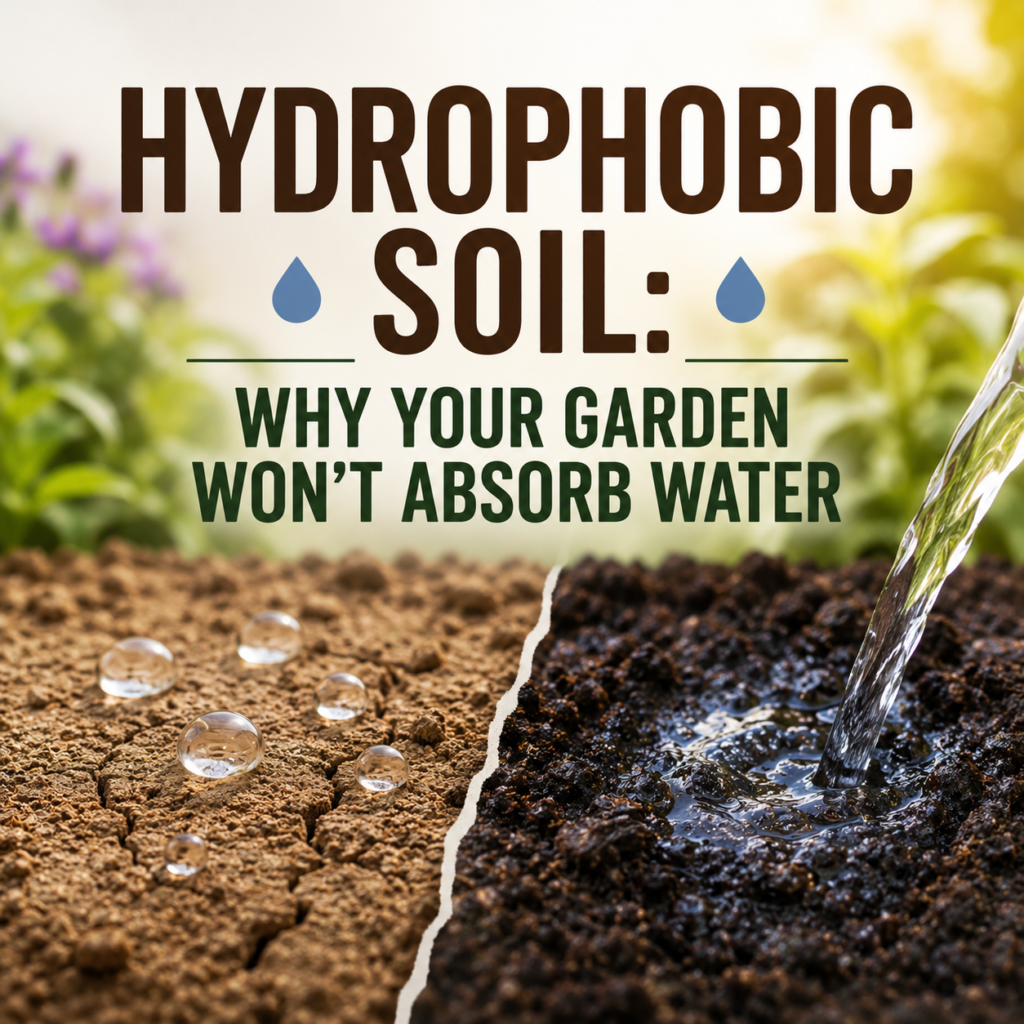
If the surface gets wet but the soil underneath remains dry, water is not moving through the bed evenly. Extremely dry soil can sometimes become water-repellent, or hydrophobic.
If you noticed water problems all summer, read our guide to hydrophobic soil for a deeper explanation of why this happens and what gardeners can do about it.
For post-harvest care, the key is identifying the problem now. You do not want to discover it again after next year’s plants are already in the ground.
Do Not Confuse a Water Problem With a Fertilizer Problem
A disappointing harvest can make gardeners reach immediately for fertilizer.
Sometimes nutrients really are part of the problem.
But sometimes they are not.
If water cannot move effectively into the root zone, adding more fertilizer does not fix the reason the roots are staying dry.
That is why soil care after harvest should include more than feeding the garden.
Ask whether the soil is functioning well physically.
Can water move through it?
Does it feel compacted?
Is the structure still good?
If you are not sure about nutrients, consider testing the soil before adding more fertilizer or large amounts of compost.
Penn State Extension recommends using soil and compost testing to better understand what nutrients are already present instead of assuming that more compost is always beneficial.
Add Organic Matter Where Your Garden Needs It
Finished compost can be a useful part of post-harvest soil care.
It contributes organic matter and can support better soil structure over time.
But this is another area where more is not automatically better.
If your soil has been heavily amended for years, you may not need another thick layer.
If the soil is low in organic matter, a thoughtful application may be useful.
The right amount depends on the soil you already have.
Fall leaves can also play a role. Oregon State University Extension notes that a layer of leaves can protect annual garden soil while adding organic matter as the material breaks down.
Use what makes sense for your garden instead of treating fall cleanup like a race to pile on amendments.
Think About Cover Crops
If your vegetable bed will sit empty for months, a cover crop may be worth considering.
Cover crops are plants grown partly for what they do for the soil rather than for a harvest.
Depending on what you plant, they can help protect bare soil, reduce erosion, hold nutrients, add organic material, and support soil structure.
University of Maryland Extension recommends cover crops as a useful option for home vegetable gardens between harvests.
Timing and crop choice vary by region, so check recommendations for your climate before planting.
A gardener in a mild winter climate has different options than someone whose ground will soon freeze solid.
Protect Bare Ground
A cover crop is not the only option.
Mulch, leaves, compost, or other appropriate material can also help keep soil covered.
The main thing is to avoid thinking:
“There are no plants here, so nothing needs protection.”
Bare garden soil is still exposed to rain, wind, erosion, weeds, and temperature swings.
Protecting the surface can also help reduce the crusting and compaction that may happen during wet winter weather.
Your garden may be resting.
Your soil is still there doing its job.
Where That Yucca Stuff Fits After Harvest
What if your post-harvest check shows that the biggest problem is water?
Maybe the soil is extremely dry.
Maybe water beads on top.
Maybe certain areas are still dry underneath even after you water them.
That is where a soil wetting agent may fit into your fall routine.
That Yucca Stuff is a soil conditioner and wetting agent designed to help water spread and penetrate soil more effectively. Its yucca-based saponins act as surfactants, helping reduce water’s surface tension so moisture can move through soil more easily.
That does not mean it replaces the other things we just discussed.
It does not replace compost when your soil needs organic matter.
It does not replace mulch or cover crops.
It does not replace fertilizer if a soil test shows a nutrient need.
Its job is different.
That Yucca Stuff supports better water movement.
That is useful when the soil itself is getting in the way of the water you are trying to give it.
Do a Little Now Instead of Everything Next Spring
There is another good reason to care for soil after harvest.
Spring has enough jobs.
Seeds need starting.
Plants need buying.
Beds need planting.
Weather changes your plans every other day.
That is not the ideal time to suddenly discover that one bed is badly compacted, another refuses to absorb water, and the garden you thought was ready needs more work.
Post-harvest soil care spreads the workload out.
You can fix obvious problems while they are still fresh in your mind.
You remember where the tomatoes struggled.
You remember which corner always dried out.
You remember where water ran off.
Use that information.
A Simple Post-Harvest Soil Check
Before you close the garden for the year, take a quick look at the condition of the bed. Make sure spent or diseased plants have been cleaned up, check whether the soil looks compacted, and notice whether water soaks in evenly or leaves dry pockets behind.
Think about whether the bed could benefit from organic matter, mulch, or a cover crop, and avoid assuming every problem is caused by a nutrient deficiency. The goal is to understand what would make the bed healthier and easier to plant when spring comes around.
You do not need to solve ten problems if you only have two. Focus on what your garden actually showed you this season.
The Bottom Line: Harvest Is Not the End of Soil Care
Your vegetables may be finished, but your garden soil after harvest still deserves attention.
This is your chance to see what a full growing season did to the bed.
Clean it up.
Look for compaction.
Check water movement.
Use organic matter where appropriate.
Protect the surface.
And deal with obvious problems now instead of rediscovering them next spring.
Healthy soil care is not about constantly adding products.
It is about understanding what the soil needs and giving it the right kind of support.
Take Care of the Soil That Took Care of Your Garden
If your post-harvest soil is dry, stubborn, or allowing water to run off instead of soaking in, That Yucca Stuff can help support better water penetration as part of your fall soil-care routine.
Shop That Yucca Stuff and help your soil make better use of the water it receives.