Is a Wetting Agent a Fertilizer? What Gardeners Need to Know
Is a wetting agent a fertilizer? No, but it can still play an important role in helping your plants get what they need from the soil.
Fertilizers add nutrients while wetting agents help water move through soil. Both are important for a healthy garden.
If you have ever watered your plants and watched the water sit on top, run off the sides, or drain straight through a pot, you may not have a fertilizer problem. You may have a water movement problem.
This is where a wetting agent or soil conditioner can help bridge the gap between watering and nutrient uptake.
Is a Wetting Agent a Fertilizer? Here’s the Simple Answer
A wetting agent is not the same thing as fertilizer.
Fertilizer feeds plants by supplying essential nutrients such as nitrogen, phosphorus, and potassium.
A wetting agent helps water penetrate the soil, preventing runoff and dry spots.
Fertilizer is food for plants.
Water moves that food through the soil.
A wetting agent helps water spread more effectively.
That matters because plants do not just need nutrients sitting somewhere in the soil. Their roots need water to help carry those nutrients where they can be used. If the soil is too dry, compacted, or water-repellent, your plants may struggle even when you water regularly.
Now, let’s look more closely at fertilizer and what it actually does:
Fertilizer is made to add nutrients to the soil or growing mix.
Different fertilizers do different things. Some are made for flowers. Some are made for vegetables. Some are made for lawns, trees, or houseplants. The goal is usually to support growth, green leaves, root strength, flowers, fruit, or overall plant health.
But fertilizer does not fix every gardening problem.
If water is not moving through the soil correctly, adding more fertilizer may not help. In some cases, it can even make things more confusing because the plant still looks stressed.
You may see yellow leaves, slow growth, drooping, or dry patches, and assume the plant needs more food. But sometimes, the soil is the real issue.
Before adding more fertilizer, ask:
- Is water soaking into the soil?
- Is the soil staying dry in the middle?
- Is water running off the top?
- Is the potting soil pulling away from the edge of the container?
- Are the roots actually getting moisture?
If the answer points to a watering or soil problem, a soil conditioner may be a better next step than more fertilizer.
So, what exactly does a wetting agent do for your garden?
A wetting agent helps water spread out and move into the soil more evenly.
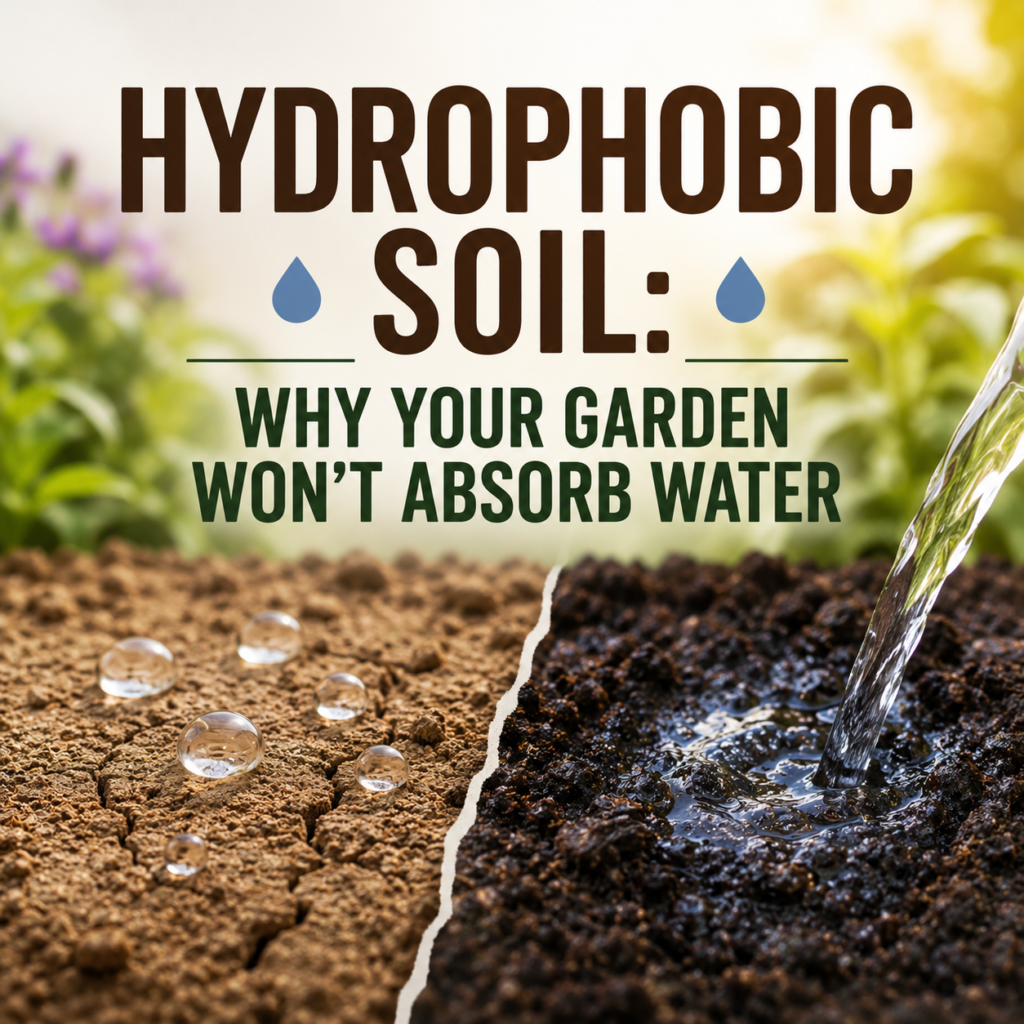
Dry soil can sometimes seem to push water away. This is often called hydrophobic soil, which means water-repellent soil. You may notice this more in containers, raised beds, hanging baskets, houseplants, sandy soil, or potting mixes that have dried out too much.
When soil becomes water-repellent, water may:
- sit on top of the soil
- run off the surface
- drain down the sides of a pot
- leave the center of the root ball dry
- miss parts of the root zone
- make the plant look thirsty even after watering
A soil wetting agent helps reduce water’s surface tension, allowing it to spread and soak in more easily. That helps water reach more of the soil instead of taking the fastest path out.
This is especially helpful for gardeners who feel like they are watering but still see dry, stressed plants.
Why Soil Can Repel Water
Soil can start pushing water away for a few reasons.
One common reason is that it got too dry. Many potting mixes are harder to rewet once fully dry. The surface may look wet for a moment, but deeper inside, the soil can still be dry.
This is common in:
- container gardens
- houseplants
- hanging baskets
- raised beds
- seedling trays
- older potting soil
- peat-heavy mixes
- sandy soil
- soil with dry organic matter
The University of California Master Gardeners note that many potting soils can become hydrophobic when they dry out, making them difficult to rewet. They also explain that water can run between the pot and the dry root ball, making it look like the plant was watered even when the middle is still dry.
That is why a plant can wilt even after you water it. The water may not have gone where the roots needed it most.
Where That Yucca Stuff Fits In
That Yucca Stuff is a soil conditioner and wetting agent. It is designed to improve water movement in the soil.
This makes it different from fertilizer, which supplies nutrients.
You are not using it to “feed” your plants in the same way you would use a plant food. You are using it to help the soil take in water more effectively.
That can be helpful when the soil is dry, stubborn, compacted, or not absorbing water the way it should.
For gardeners, this is a big deal because watering problems can look like plant problems. A plant may look weak, droopy, or stressed, but the real issue may be that water is not reaching the root zone well enough.
That Yucca Stuff helps support the soil side of the routine so water can move through the growing area more evenly.
Do You Still Need Fertilizer?
Maybe. It depends on your plants, your soil, and what you are growing. A wetting agent does not replace fertilizer. If your soil lacks nutrients, you may still need compost, fertilizer, or amendments. Fertilizer works best when the soil absorbs and moves water properly.ter.
Water helps carry nutrients through the soil. If the soil is too dry or water is running away from the roots, nutrients may not be used as effectively as they should.
So the question is not always, “Do I need fertilizer or a wetting agent?”
Sometimes the better question is:
Is my soil taking in water the way it should?
If yes, then fertilizer may be the next thing to look at.
If no, start with the soil’s ability to absorb water.
Signs You May Need a Wetting Agent Instead of More Fertilizer
You may need a wetting agent or soil conditioner if you notice:
Water sits on top of the soil.
If water pools on the surface before soaking in, the soil may be dry, compacted, or water-repellent.
Water runs off quickly.
If water rushes away instead of soaking down, your plants may not be getting the deep watering they need.
Potted plants dry out too fast.
If the pot feels light and water drains out almost right away, the soil may not be holding moisture evenly.
The soil pulls away from the pot.
This is common when potting soil dries and shrinks. Water can seep down the gap between the soil and the container rather than soaking into the root ball.
Plants wilt even after watering.
This can happen when the soil’s outer surface gets wet while the center stays dry.
Raised beds seem dry below the surface.
Raised bed mixes can break down, settle, or compact over time. When that happens, water may not move through the bed as evenly as it did at first.
Wetting Agent vs. Soil Conditioner
These terms can overlap, which is why gardeners get confused.
A wetting agent focuses on how water spreads and soaks into soil.
A soil conditioner is a broader term. It usually means something that helps improve the way soil works.
That Yucca Stuff can be described as both because it supports better water movement and helps improve the soil environment.
The main point is simple: this type of product supports the soil. It is not the same as dumping more nutrients into the garden and hoping the plant perks up.
Can You Use a Wetting Agent With Fertilizer?
In many gardening routines, yes, a wetting agent can be used alongside other garden products.
But always follow the product directions. More is not better. Plants and soil need support, not a random mix of everything on the shelf.
A smart order of thinking is:
First, check whether the soil is taking in water.
Then, check whether the plant may need nutrients.
Then, build a routine that supports both.
For many home gardeners, the problem is not that they are ignoring their plants. The problem is that they are watering, feeding, and working hard, but the soil is not cooperating.
That is frustrating. But it is also fixable.
Why This Matters for Everyday Gardeners
Most gardeners are not trying to become soil scientists.
They just want their plants to grow.
They want their vegetables to stop drooping.
They want their flowers to bounce back.
They want their houseplants to stop acting dramatic every time the soil dries out.
They want their raised beds to work like they did the first season.
Understanding the difference between fertilizer and a wetting agent makes those choices easier.
If your plant needs nutrients, fertilizer may help.
If your soil is not taking in water, a wetting agent may help.
If both are happening, you may need to support the soil first so the rest of your care routine can work better.
Conclusion
So, is a wetting agent a fertilizer? No. A wetting agent has a different job.
Fertilizer adds nutrients. A wetting agent helps water move into and through the soil more evenly.
That difference matters because healthy plants need more than food. They need soil that can hold water, retain enough moisture, and let roots do their job.
If water is running off, sitting on top, or missing the root zone, That Yucca Stuff can help improve soil performance as part of your regular garden routine.
Try That Yucca Stuff Today
Dealing with dry, stubborn, or water-repellent soil? That Yucca Stuff helps support better water movement so your soil can do its job.
Shop That Yucca Stuff today and give your garden a better chance to soak up every drop of water.